
Hotel Management Internship in India: Duties, Skills & How to Prepare
If you are studying hotel management, an internship is where...
Read More →

After 12th standard, one of the most common questions students ask is, “Which hospitality course should I choose?” Finding the best hospitality course in India depends on several factors, including your career goals, preferred area of hospitality, course duration, and the practical exposure offered by the institute.
In this guide, we explore the major hospitality courses in India, including a Bachelor in Hotel Management, diploma in hotel management, International Diploma in Hotel Management, and specialised hospitality courses. By comparing their duration, learning opportunities, and career options, you can make a more informed decision about the right course for your future.
The right hospitality course depends on your education goals, preferred career path, and the type of training you want to receive.
| Hospitality Course | Duration | Career Direction | Suitable For |
|---|---|---|---|
| Bachelor in Hotel Management | 3 years | Hotel operations and management | Students looking for a comprehensive qualification |
| Diploma in Hotel Management | 2 years | Hotel operations and entry-level roles | Students looking for focused, practical training |
| International Diploma in Hotel Management | 1 year | Global hospitality opportunities | Students interested in international hospitality education |
| Specialised Hospitality Courses | Varies | Culinary, front office, F&B, etc. | Students interested in a specific hospitality area |
When searching for the best hotel management course in India, it is important to understand what each pathway offers.
A bachelor’s programme, such as a BHM course, provides broad exposure to the hotel and hospitality industry. It combines management concepts with practical training and covers different areas of hotel operations.
In comparison, a diploma programme provides more focused and practical training in essential hospitality operations. It can be suitable for students who want to develop job-oriented skills through a shorter qualification.
The 1-year International Diploma in Hotel Management can be considered by students interested in international hospitality education and global service standards.
Ultimately, when choosing among hospitality courses in India, look beyond the course duration. Consider the curriculum, practical training, industry exposure, internships, and overall learning environment offered by the institute.
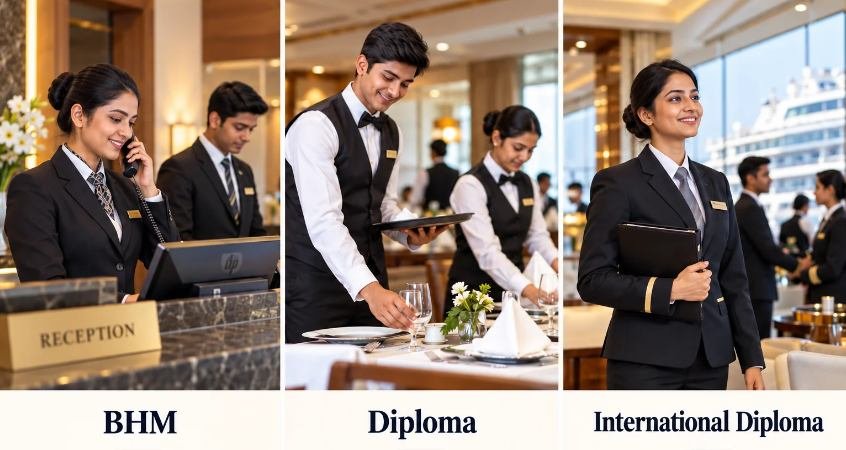
A Bachelor in Hotel Management is a popular hotel management course after 12th. It provides broad exposure to major areas of hotel operations while combining theoretical learning with practical training.
Students can learn about core areas such as food production, front office, food and beverage service, and housekeeping. A 3-year BHM course can be suitable for students who want a comprehensive undergraduate qualification and are interested in building a long-term career in the hospitality industry.
A Diploma in Hotel Management offers a focused and skill-based approach to hospitality education. It places greater emphasis on practical and operational skills along with the necessary theoretical knowledge.
Students looking for a shorter qualification with hands-on learning may consider this pathway. Training can cover essential hospitality areas and prepare students for entry-level opportunities in areas such as food and beverage service and front office operations.
A hotel management diploma can be suitable for students who prefer practical learning and want to develop industry-oriented skills within a 2-year programme.
The International Diploma in Hotel Management is a 1-year programme focused on international hospitality standards and practices. It can be suitable for students interested in developing knowledge relevant to international hospitality environments.
Students interested in opportunities such as cruise lines or international luxury hotels may consider an internationally focused programme. Before enrolling, students should check the awarding body, recognition, and available progression options.
This type of training can be particularly relevant for students who want to work in multicultural and diverse hospitality environments.
Most hospitality programmes after 12th require students to have completed Class 12 or an equivalent qualification. Students from Commerce, Arts, and Science backgrounds can pursue many hospitality programmes, although eligibility requirements can vary by institute and course.
Minimum marks, entrance requirements, and English-language requirements may also differ between institutions. Students should check the specific eligibility criteria of the programme they plan to join before applying.
Yes, some diploma and vocational hospitality pathways may accept students after Class 10. However, eligibility depends on the specific programme and institute.
Students should verify the latest admission requirements, minimum qualifications, and course structure with the respective institute before applying.
A quality hospitality management course should help students develop practical, real-world skills along with theoretical knowledge.
Key learning areas can include:
Practical training is an important factor when selecting a hospitality course. Since hospitality is a hands-on industry, exposure to training kitchens, front office activities, and simulated hotel environments can help students develop the confidence and skills required for professional guest interactions.

Hospitality education can open career opportunities across different areas of the industry.
Graduates can pursue roles such as Guest Relations Executive, Front Office Executive, and other hotel operations positions. These roles support the day-to-day functioning of hotels and help deliver a positive guest experience.
There are opportunities in restaurant operations, food and beverage service, and other hospitality service roles. Students can work in areas ranging from restaurants and cafés to banquets and larger hospitality operations.
Students interested in cooking and food production can explore career paths in culinary operations, commis roles, kitchen operations, and specialised areas such as bakery and food production.
Hospitality skills can also be applied across hotels and resorts, hospitality companies, standalone restaurants, aviation catering, and international hospitality environments.
The specific career opportunities available to a graduate can depend on their qualification, skills, practical experience, specialisation, and the organisation they join.
Hospitality is a hands-on industry, so theoretical knowledge alone may not provide enough exposure to professional hotel operations.
Practical training in areas such as food production, front office, food and beverage service, and housekeeping can help students understand how different hotel departments work. Industry exposure and internships can further help students become familiar with professional workplace expectations.
At AIHM, the “Learn & Serve” approach focuses on practical learning and developing the skills students need for hospitality careers.
Choosing the best hospitality course in India ultimately depends on your education and career goals. Students looking for comprehensive undergraduate education can consider a 3-year Bachelor in Hotel Management, while those seeking focused practical training can consider a 2-year Diploma in Hotel Management.
Students interested in a shorter international pathway can explore a 1-year International Diploma in Hotel Management, while those who want to specialise in a particular area can consider a specialised hospitality course.
Explore AIHM’s hospitality courses and choose a programme that matches your education, interests, and career aspirations.
The right course depends on your career goals, preferred qualification, desired course duration, and the type of hospitality training you want to pursue.
Major options include the 3-year Bachelor in Hotel Management for comprehensive undergraduate learning and the 2-year Diploma in Hotel Management for focused, practical training. A 1-year International Diploma is another option for students interested in international hospitality education.
Yes. Students from Arts, Commerce, and Science backgrounds can pursue many hotel management and hospitality programmes, subject to the specific eligibility requirements of the institute and course.
Yes, some diploma and vocational hospitality programmes may accept students after Class 10. However, eligibility depends on the specific institute and programme.

Amazon Institute of Hotel Management Noida — preparing future leaders for the global hospitality industry since 1997 through practical, industry-aligned training.
Fill in your details and our admissions team will get in touch with you shortly.